



There’s been a significant amount of interest lately related to the safety of our drinking water supply. It seems that every day there is another news story about contamination concerns in drinking water from PFAS, lead, TCE, and 1,4-dioxane.
Merit Laboratories is proud to have been a participating laboratory in a multi-laboratory validation study to support a new ultra-short chain PFAS drinking water method under development by the U.S. Environmental Protection Agency. This study represents an important step toward standardizing the measurement of ultra-short chain PFAS in drinking water and other aqueous environmental matrices.
Merit Laboratories is proud to announce an expansion of its PFAS accreditation through the Department of Defense Environmental Laboratory Accreditation Program (DoD ELAP), reinforcing our commitment to delivering high-quality, compliant PFAS data for defense and federal projects. Merit Laboratories’ DoD ELAP scope now includes the following compounds analyzed by EPA Method 1633 (LC/MS/MS).
Soil can be a vector for harmful bacteria, plant viruses, fungi, nematodes, and other biological propagules. To safeguard U.S. agriculture and natural resources, the United States Department of Agriculture (USDA) strictly regulates the movement of soil, both from foreign sources and from domestic areas under federal quarantine.
We are excited to congratulate our outstanding clients for being recognized among the Top 200 Environmental Firms of 2025, as ranked by Engineering News-Record (ENR). This well-earned recognition reflects your dedication to innovation, quality, and excellence across the environmental industry.
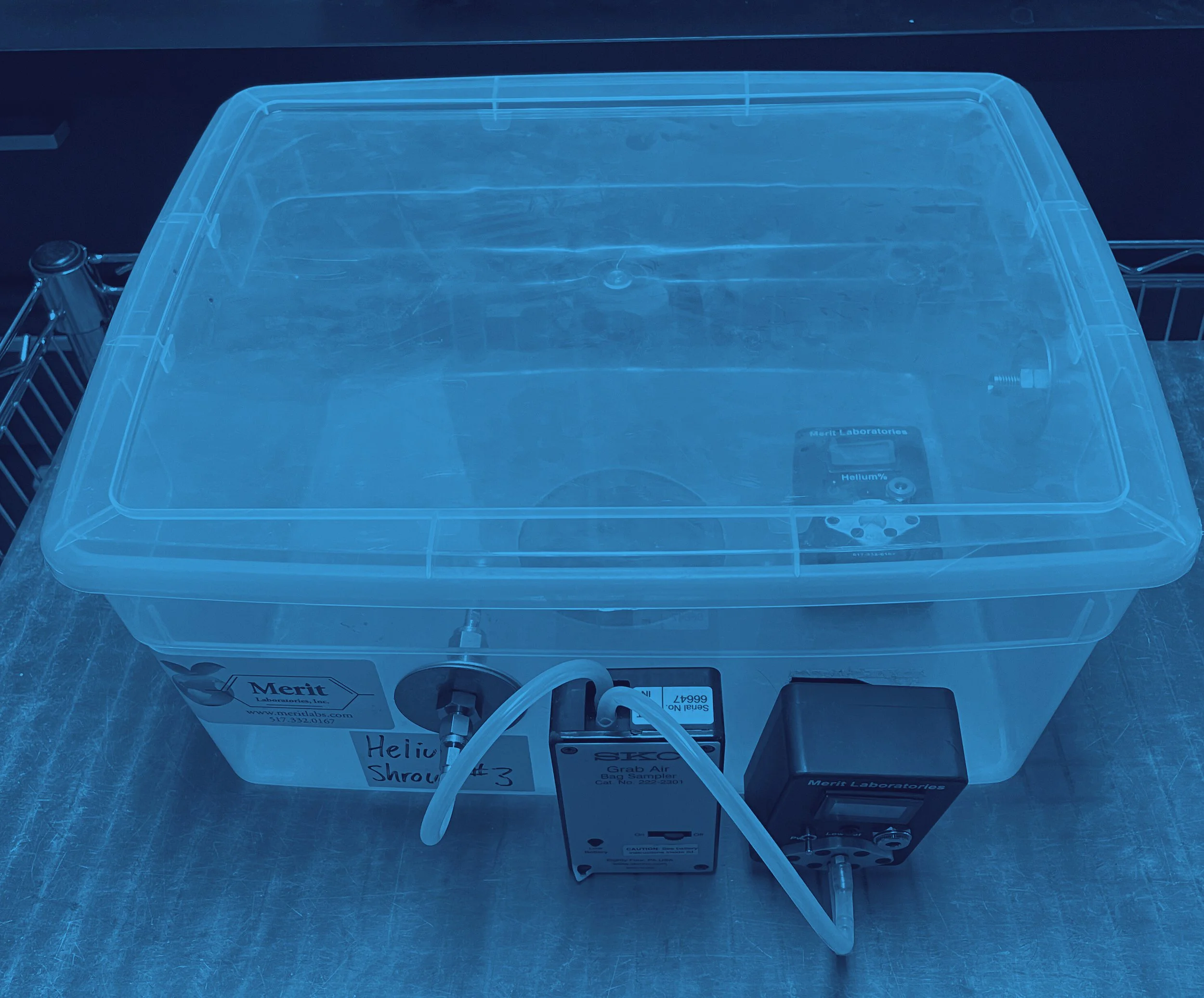
Collecting high-quality soil gas samples in the field for TO-15 analysis is essential for generating reliable data. Yet in the field, the process can be time-consuming and prone to error. With our clients’ sampling challenges in mind, Merit Laboratories designed a helium shroud that makes soil gas sampling more efficient, accurate, and reproducible — without the need for tools or field calibration.
As a leader in environmental laboratory testing, Merit Laboratories’ team of project managers and client service professionals takes pride in providing guidance to clients when setting-up projects that require analytical services. We’ve recognized that sampling for vapor intrusion and indoor air projects often lead to the most questions from environmental consulting clients.
Here are some key questions and points to consider to successfully set-up a TO-15 air sampling project:
The Interstate Regulatory Technology Council (ITRC) just published three new fact sheets on Per- and Polyfluoroalkyl Substances (PFAS) along with one updated fact sheet. The four fact sheets address important topics related to PFAS remediation technologies, sample collection, laboratory methods, environmental fate and transport, and more. These four PFAS updates from ITRC are the most current guidance available and will provide environmental professionals with detailed information on PFAS
The presence of PFAS at sites throughout Michigan have prompted the Michigan Department of Environmental Quality (MDEQ) to require Wastewater Treatment Plants (WWTP) with an Industrial Pretreatment Program (IPP) to address this emerging contaminant. In a letter to WWTPs dated February 20, 2018, the MDEQ is requiring several actions be taken to ensure that all IPPs are prohibiting discharges of PFOS and PFOA. By June 20, 2018, the MDEQ is requiring WWTPs with an IPP to complete the following:
Because of their prevalence in industrial manufacturing applications, many of our environmental consulting and industrial clients find themselves requiring wipe sampling guidance for PCBs. Merit Laboratories provides its clients with PCB wipe sampling kits to support field sample collection activities. The Merit PCB wipe kits are typically used for the wipe sampling of machinery, equipment, flooring, and other surfaces within industrial manufacturing facilities.
The Michigan Department of Environmental Quality (MDEQ) has released the final Incremental Sampling Methodology and Applications reference guide. The MDEQ guide can be used by environmental professionals as a technical reference for using incremental sampling method (ISM) techniques to evaluate contaminated land while managing risk and future use. ISM is also known as Multi-Incremental Sampling (MIS), Incremental Composite Sampling (ICS), or Incremental Sampling Methodology (IS).
The DoD Environmental Data Quality Workgroup recently issued a fact sheet on detection and quantitation to assist project managers and data users of laboratory data for DoD projects. The EDQW guidance sheet is geared to assist project manager or other decision-makers that use environmental laboratory data to accomplish one or more of the following tasks for a DoD project:
The term summa canister is trying to go the way of other product names that have become generic titles for their intended purpose, like Kleenex and Band Aids. The term summa canister is used in the environmental industry by many professionals to describe the sampling media used for air sampling prior to laboratory testing. There is, however, inherent risk in believing that summa canister is an acceptable term that defines all air sampling media for TO-15 projects.
The rankings are out and three metals top the chart: arsenic, lead, and mercury. The Agency for Toxic Substances and Disease Registry (ATSDR) has released its 2017 list of substances at EPA-managed contamination sites posing the most significant risk to human health. A total of 275 substances are listed on the entire ATSDR 2017 Substance Priority list. Here are the Top 50 substances listed.