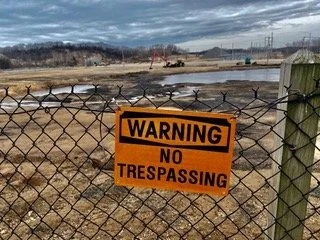





PFAS Detected in Illinois Drinking Water in Over 100 Community Water Systems

PFAS Detected in Illinois Drinking Water in Over 100 Community Water Systems

Nearly one in every eight community water systems in Illinois were found to have PFAS detections in drinking water. The Illinois Environmental Protection Agency (EPA) recently announced the completion of an 18-month statewide sample collection study of PFAS in drinking water. The study collected drinking water from over 1,000 community water systems (CWS). According to the Illinois EPA, 126 of the 1,107 CWSs sampled had confirmed PFAS detections.


Fenceline Monitoring for Refineries: Good Fences Makes Good Neighbors

Fenceline Monitoring for Refineries: Good Fences Makes Good Neighbors

Oil refineries and petrochemical plants that fall under the Petroleum Refinery Sector are required to monitor air emissions at their property boundary. The boundary emission monitoring requirement, referred to as fenceline monitoring, is based upon U.S. EPA rules that became effective in 2016, as updates to 40 CFR Part 60 and 40 CFR Part 63.

Michigan Officially Establishes Groundwater Clean-up Criteria for PFAS

Michigan Officially Establishes Groundwater Clean-up Criteria for PFAS

The State of Michigan’s groundwater clean-up rules now officially include PFAS compounds, based upon the state’s PFAS limits in public water supplies. Limits for seven PFAS compounds were officially added to the groundwater clean-up rules by the Michigan Department of Environment Great Lakes and Energy (EGLE) on February 15, 2022. The generic clean-up criteria (GCC) for the seven PFAS compounds are as follows

PFAS Detected at Harbor Island in Grand Haven

PFAS Detected at Harbor Island in Grand Haven

The Michigan EGLE recently added Harbor Island in Grand Haven to their list of PFAS sites. The Grand Haven site is a natural marshland at the mouth of the Grand River as it flows into Lake Michigan. The site was first used as a landing point for logging operations. During the 1950s and 1960s the site was used as a dump. The coal-fired J.B. Sims Generating Station began operating in the early 1960s by the Grand Haven Board of Light and Power (GHBLP). Coal ash wastes were disposed of in unlined lagoons and the adjacent wetlands. In the early 1980s, clay lined lagoons were constructed for coal ash management.

First Illinois Groundwater Quality Standards for PFAS Chemicals Proposed

First Illinois Groundwater Quality Standards for PFAS Chemicals Proposed

The Illinois Environmental Protection Agency (EPA) has filed administrated rules to create the first groundwater quality standards for PFAS chemicals in the state. According to the IEPA in a recent announcement, it has submitted amendments to 35 Illinois Administrative Code (Ill. Admin. Code) Part 620 to the Illinois Pollution Control Board (Board).

Wisconsin Natural Resources Board Considering PFAS Regulatory Limits

Wisconsin Natural Resources Board Considering PFAS Regulatory Limits

Advocates for the health of Wisconsinites are hopeful that the state’s Natural Resources Board (NRB) will vote on establishing PFAS regulatory limits for both surface water and drinking water at its next meeting. The NRB, which sets policy for the Wisconsin Department of Natural Resources (DNR), has scheduled its next meeting for February 22-23 in Madison.

EPA Finalizes the Fifth Unregulated Contaminant Monitoring Rule (UCMR)

EPA Finalizes the Fifth Unregulated Contaminant Monitoring Rule (UCMR)

The U.S. EPA has published the Fifth Unregulated Contaminant Monitoring Rule (UCMR 5). UCMR 5 requires sample collection for 30 chemical contaminants between 2023 and 2025 using analytical methods developed by EPA and consensus organizations. This action provides EPA and other interested parties with scientifically valid data on the national presence of these contaminants in drinking water. PFAS are included in the UCMR.

Wisconsin Develops PFAS Action Plan to Address Concerns

Wisconsin Develops PFAS Action Plan to Address Concerns

The number of PFAS-contaminated sites in Wisconsin continues to grow at a rapid rate. The Wisconsin Department of Natural Resources (WDNR) released a PFAS Action Plan to address growing public health and environmental concerns regarding PFAS in Wisconsin. The Wisconsin PFAS Action Council (WisPAC), a group of nearly 20 state agencies and the University of Wisconsin System, developed the plan, as part of a statewide initiative to ensure Wisconsinites have access to clean, safe drinking water.

ASTM Announces Plans to Release a Standard Test Method for PFAS (ASTM D8421-21)

ASTM Announces Plans to Release a Standard Test Method for PFAS (ASTM D8421-21)

In what many scientists believe will be a significant advancement in analytical testing methodology, ASTM is planning to release a new Standard Test Method for PFAS in aqueous sample matrices. This new method, ASTMD8421-21, utilizes Liquid Chromatography/Tandem Mass Spectrometry (LC/MS/MS) with Isotope Dilution (ID). It is anticipated to be the first published ASTM method for PFAS that incorporates isotope dilution in the actual method and not simply a footnote.

Merit Laboratories to Participate in the 2021 Great Lakes PFAS Summit

Merit Laboratories to Participate in the 2021 Great Lakes PFAS Summit

Back for its sophomore season, the Great Lakes PFAS Summit will be held once again be held virtually . The summit, which brings together scientists, government officials, regulators, academic researchers, industry, and community organizations on all topics PFAS, is scheduled for December 6th -10th, 2021. The Great Lakes PFAS Summit will be hosted by the Michigan Department of Environment, Great Lakes, and Energy (EGLE). The 2020 conference had over 1,800 participants, according to conference organizers. Registration for the summit is still open through the conference’s registration page.